

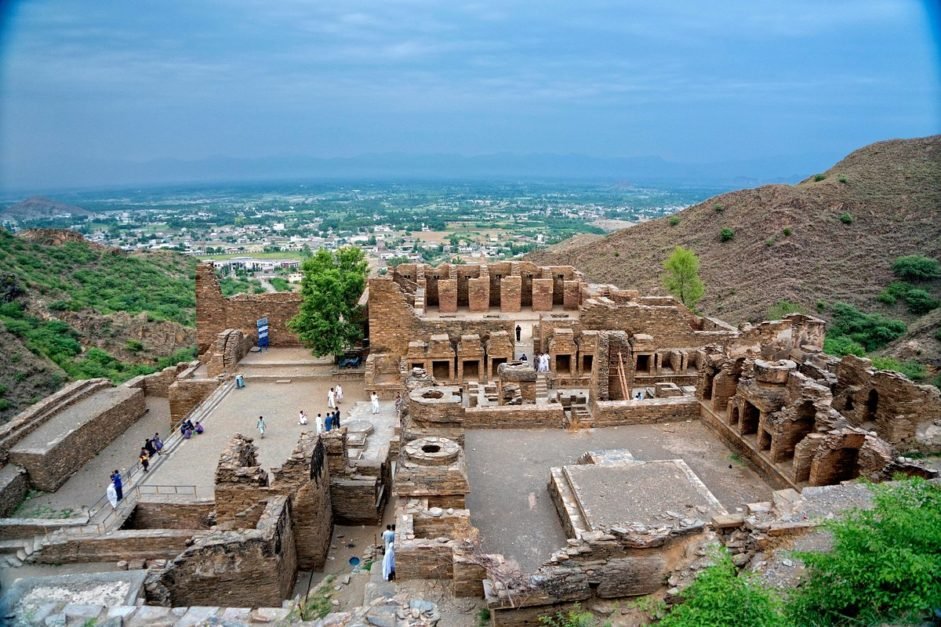
Pakistan's Buddhist Heritage
Ancient Gandhara was a major center of Buddhist learning, art, and culture. Monasteries, stupas, sculptures, and archaeological remains preserve its legacy.
Its location connected South Asia with Central Asia, creating lasting cultural exchange.
Major Heritage Sites
- Taxila: Ancient ruins, monasteries, and stupas across a historic landscape.
- Takht-i-Bahi: A well-preserved Buddhist monastic complex in the hills of Khyber Pakhtunkhwa.
- Swat Valley: Mountain scenery alongside Buddhist archaeological remains.
- Dharmarajika Stupa: An important Buddhist monument in the Taxila region.
- Julian Monastery: Historic monastery remains overlooking the Taxila area.
- Shingardar Stupa: A historic Buddhist monument surrounded by Swat's mountains.
Gandhara Through History
Gandhara developed a distinctive Buddhist artistic tradition, blending local styles with influences from other ancient cultures.
Its artistic and religious influence later spread across Central and East Asia.
History, Art & Landscape
Gandharan sites bring together archaeology, ancient architecture, sculpture, and striking mountain scenery.
From the ruins of Taxila to the valleys of Swat, each destination offers a different perspective on Pakistan's past.
Explore Gandhara's historic sites, ancient art, cultural heritage, and mountain landscapes.